

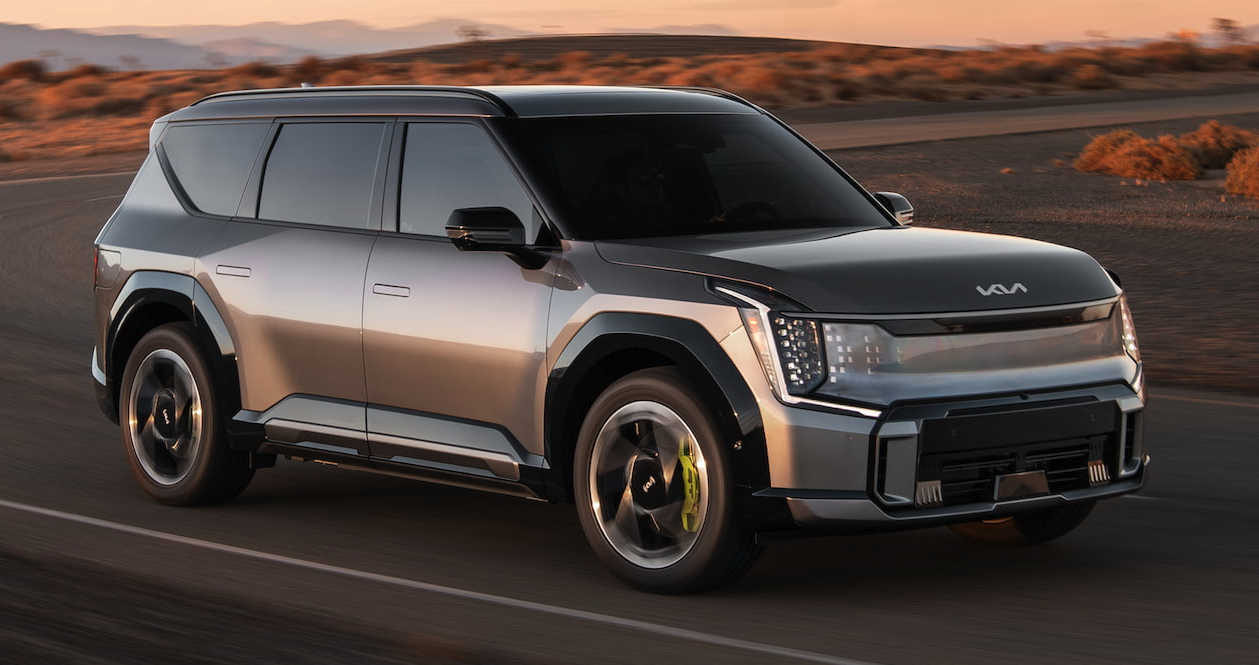
Learn more about Kia EV service schedules, typical maintenance required for Kia EV models, and how much you can potentially save over the life of the vehicle.
The days of scheduling oil changes every three months are over. If you own or are considering a Kia EV, one of the first things you will notice is how different routine maintenance looks compared to a gas-powered vehicle. The service intervals are longer, the list of required services is shorter, and for most owners, the annual cost is noticeably lower.
This guide breaks down the Kia EV maintenance schedule in plain terms, compares the real cost of ownership against a gas vehicle, and answers the questions new EV owners ask most often.
The Kia EV Maintenance Schedule
Kia uses a standardized service schedule across its EV lineup, including the EV6 and EV9. The 8,000-mile mark is the baseline for routine service, and each milestone builds on the one before it. Be sure to check your owner’s manual for specific requirements and recommended services.
| Service Interval | What’s Included |
|---|---|
| 8,000 miles | Tire rotation, multi-point inspection (brakes, coolant levels), software check |
| 16,000 miles | Everything above, plus cabin air filter replacement |
| 48,000 miles | Everything above, plus brake fluid replacement |
| 100,000 to 120,000 miles | First major coolant system service |
The schedule is straightforward by design. Because there is no engine, a large portion of the service items on a traditional maintenance checklist simply do not apply to a Kia EV.
What You Skip With an EV
Gas vehicle owners pay for oil changes, spark plug replacements, timing belt service, transmission flushes, and exhaust repairs on a regular schedule. Kia EV owners pay for none of those.
Regenerative braking can also extend brake pad life. When you slow down in a Kia EV, the motor recovers energy from that deceleration rather than relying on friction alone. Brake pads see far less wear as a result when using the regenerative braking feature.
The practical effect is a maintenance routine that is both simpler and less expensive than most drivers expect coming from a gas vehicle.
Kia EV Maintenance Services
Kia EVs have fewer moving parts than gas-powered vehicles and do not need traditional maintenance like oil changes. However, that does not mean your Kia EV can go without routine service. It is still important to follow the maintenance schedule in your owner’s manual to help protect your vehicle’s performance, range, safety, and long-term reliability.
Routine Kia EV maintenance may include tire rotations, brake inspections, cabin air filter replacement, windshield wiper replacement, fluid checks, battery health inspections, charging system checks, and software updates when available. Tire care is especially important on an EV, since instant torque and added battery weight can lead to uneven or premature tire wear if rotations are skipped.
Whether you drive a Kia EV6, EV9, Niro EV, or another electric Kia model, our service team can help you stay on top of the maintenance your vehicle still needs. Schedule Kia EV service with our team to keep your electric vehicle running smoothly.
The Truth About EV Tires
EVs are heavier than comparable gas vehicles, and they deliver torque the instant you press the accelerator. Both of those characteristics put more demand on tires. EV tires tend to wear faster than tires on a gas-powered vehicle, and that is worth planning around. Realistically, this has a lot to do with how you drive as well. Repeatedly accelerating fast from a stop is going to put more wear on your tires over time.
The most effective way to extend tire life is to stay current on rotations. Kia’s 8,000-mile interval is well-timed for this. When it comes time to replace tires, EV-rated options are recommended and worth the investment. They are engineered for the weight and torque profile of an electric drivetrain and generally provide better range and a quieter ride compared to standard alternatives.
Common Questions From New Kia EV Owners
Do I need to visit the dealer for every software update?
Most routine software updates for Kia EVs are delivered over the air through the Kia Connect system. You do not need to schedule a service appointment for standard updates. Dealer visits for software-related work are typically reserved for diagnostic needs or hardware-level service. If you have questions regarding a specific software update you can call us to verify or to schedule a service appointment.
How much can I save in maintenance by switching to an EV?
Maintenance savings will vary based on how much you drive, tire wear, driving habits, and the specific vehicle you choose. EVs can cost less to maintain because they do not need oil changes, have fewer moving parts, and often experience less brake wear thanks to regenerative braking. Over seven years, many drivers may save roughly $2,000 to $4,500 on routine maintenance compared to a similar gas-powered vehicle, though actual savings can be higher or lower depending on your situation.
Can I use regular tires on my Kia EV?
Standard tires are not designed for the load and torque demands of an electric drivetrain. EV-rated tires are engineered to handle those conditions better and typically deliver improved range and a quieter cabin experience.
How long do Kia EV batteries last?
Kia backs its high-voltage battery with a 10-year, 100,000-mile warranty. Real-world data continues to show that EV batteries retain most of their capacity well beyond that threshold when the vehicle is charged and maintained properly.
Contact Us – Cable Dahmer Kia of Lee’s Summit
When you account for the services you skip, the lower cost-per-mile, and the extended brake life, Kia EV owners typically save 30 percent or more on routine upkeep compared to gas vehicle owners over the life of the vehicle. Tires are the main ongoing cost to plan for, but they do not offset the overall savings picture.If your Kia EV is due for service, the team at Cable Dahmer Kia of Lee’s Summit is ready to help. Schedule your service appointment online or call our service department and we will take care of the rest.
Connect with us


 Warranties include 10-year/100,000-mile powertrain and 5-year/60,000-mile basic. All warranties and roadside assistance are limited. See retailer for warranty details.